If you run an ecommerce business, you know that getting orders out quickly and accurately is the key to success - and keeping your customers happy! The journey that products take from purchase to arrival at their final destination is known as the order fulfilment process, and at the heart of this lies picking and packing.
In this Direct Fulfilment 365 blog, we're putting the spotlight on this essential process to gain a fuller understanding of the challenges involved as well as the benefits it offers. We'll also explore the possibility of outsourcing the pick-and-pack process to help you decide whether this is a sensible route for your ecommerce business.
Direct Fulfilment 365 specialises in outsourced pick-and-pack services, helping businesses streamline their operations while focusing on growth. So, let’s discover exactly what pick-and-pack actually is, how it works, and why outsourcing to a third-party logistics (3PL) provider could be a game-changer for your business!
Understanding Pick-and-Pack
We'll start with a basic explanation: Pick-and-pack is a warehouse fulfilment process where individual items are picked from storage, packed securely, and then dispatched to customers. It’s an essential service for all kinds of ecommerce brands, retailers, and businesses that need to send out products efficiently. Although it often concerns online orders, it can also relate to those placed in-store at a physical retail building.
Sounds simple enough, doesn't it? This, however, couldn't be further from the truth! While basic in principle, the actual process requires speed and accuracy. And if mistakes are made or the task is delayed, orders are either wrong, late or both, and this is bad news.
How Does Pick And Pack Work?
There are four basic stages to order fulfilment:
- Order received
- Picking
- Packing
- Labelling and shipping
As you can see, the pick-and-pack process is sandwiched in the middle, but it's the most important part in many ways.
To help us understand this fully, we'll break it down into manageable chunks.
Pick List Generation
The order-picking process begins when a customer places an order and the details are sent to the warehouse management system (WMS). This system determines exactly where each item is stored and creates a picking list for warehouse operatives.
WMS is used to support the broader inventory management system within a pick-and-pack warehouse, helping to optimise the physical process of managing stock levels. Both systems are great tools for streamlining warehouse operations, improving processing times and reducing costs.
So, you have your picking list, which contains information such as:
- Product details (SKU, name, quantity)
- Storage location (aisle, shelf, bin number)
- Special instructions (e.g., fragile items, temperature-sensitive goods)
The WMS is pretty ingenious, as it keeps track of all items in stock, including their location, status and quantity. Certain types of software will also analyse the layout of the warehouse and stock locations, and then map out the most efficient route for the staff to take to collect items quickly!
Most WMS can be integrated with CRM (Customer Relationship Management) and ERP (Enterprise Resource Planning) systems to provide a coherent view of the supply chain.
Picking Methods
To speed things up even more, the warehouse team will use a range of different methods to collect items on the list. This usually depends on the warehouse layout, order volume, product variety, and order speed requirements.
Here's a quick rundown of the most commonly used picking techniques:
Piece Picking
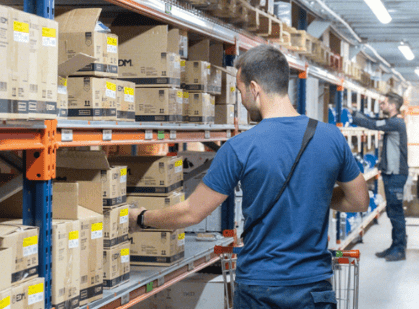
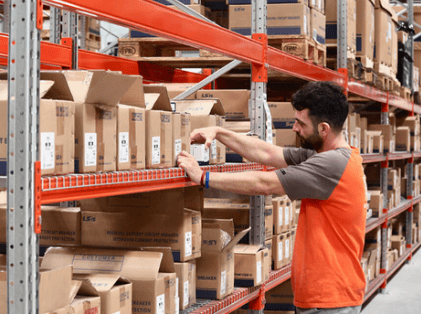
Piece picking, also known as single-order or discrete picking, is the simplest method used in fulfilment operations. A warehouse operative picks items for one order at a time, following a picking list that guides them to the correct storage locations. This approach is particularly well-suited for small businesses or those with low order volumes, as it requires minimal training and is easy to implement.
However, as order numbers grow, single-order picking becomes less efficient. Since pickers must make repeated trips across the warehouse to retrieve items, it increases travel time and slows down fulfilment, making it impractical for high-volume operations.
Batch Picking (Multi-Order Picking)
Batch picking is a more efficient method designed to handle multiple orders at once. Instead of picking items for a single order before moving on to the next, the warehouse operative groups together orders that contain similar items and retrieves them in one go.
This reduces travel time significantly, as pickers do not need to revisit the same storage locations multiple times. Batch picking is particularly beneficial for businesses with medium to high order volumes, especially when they sell popular items that frequently appear in multiple orders. However, this method requires an additional sorting step before packing, as picked items must be allocated correctly to their respective orders.
Zone Picking
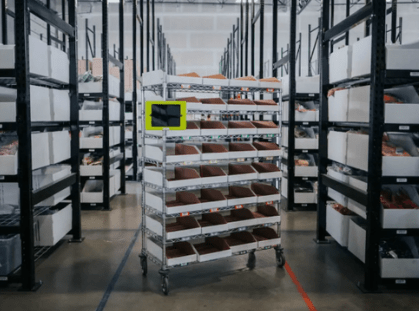
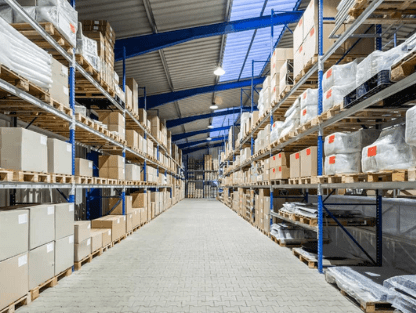
Zone picking is an ideal solution for large warehouses with diverse inventory. In this method, the warehouse is divided into different zones, and pickers are assigned to a specific area rather than moving throughout the entire facility. Each picker is responsible for collecting items from the warehouse shelves only within their designated zone.
If an order contains products from multiple zones, they are brought together at a later stage before packing and dispatch. This system improves efficiency by minimising the distance pickers need to travel, allowing them to focus on a specific section of the warehouse.
Even so, successful zone picking requires careful coordination and an effective WMS to ensure that all items are correctly consolidated before shipping. It is particularly useful for businesses with a high SKU count, such as those selling a variety of product types that need to be stored in separate sections - for example, clothing in one zone and electronics in another.
Wave Picking
Wave picking is designed for high-volume fulfilment operations that require speed and efficiency. Orders are not picked randomly but instead grouped into waves based on specific criteria such as delivery deadlines, product categories, or courier schedules.
This method allows businesses to prioritise urgent shipments and optimise resource allocation, ensuring that picking teams and equipment are used as effectively as possible. Compared to batch picking, wave picking is even more structured, making it an excellent choice for operations that deal with time-sensitive deliveries like next-day shipping.
Wave picking typically relies on sophisticated warehouse management software to coordinate the waves efficiently, making it more complex to implement than simpler picking strategies.
Automated Picking
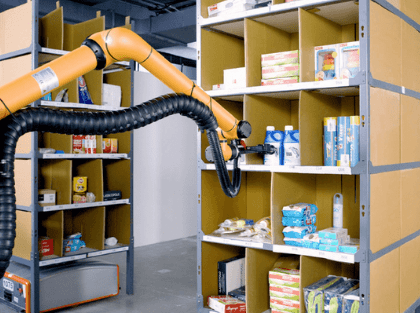
Automated warehouse picking is by far the most advanced fulfilment method, used primarily by large-scale operations handling high order volumes. Instead of human pickers manually retrieving products, robotic systems, conveyor belts, and automated storage and retrieval systems (AS/RS) take over the process. These can quickly locate, pick, and transport items with extreme accuracy, significantly reducing errors and improving efficiency.
Automated picking dramatically speeds up order fulfilment and helps businesses scale their operations without increasing labour costs. However, the initial investment required for automation is substantial, and technical expertise is needed to maintain and operate these advanced warehouse systems. For businesses looking to future-proof their fulfilment operations, automated picking offers the highest level of efficiency and scalability. Many modern ecommerce fulfilment centres already rely on automated solutions to handle thousands of orders per day with precision and speed.
Whichever picking method is used, the items are then transferred to a packing station for the next stage in the journey...
The Packing Process
The order packing process is a crucial step in order fulfilment, ensuring that products are securely prepared for shipping. Once the correct items have been picked, they must be carefully packed to prevent damage in transit, optimise shipping costs, and create a positive customer experience. The efficiency and accuracy of packing directly impact customer satisfaction, as damaged or poorly presented orders can lead to returns and negative reviews.
Now, you might not think this is a big deal, but surveys have shown that around 80% of customers will actively avoid a brand if they have bad reviews and ratings. That's a huge figure and it should be taken seriously if you want your business to survive.
Okay, that's the lecture over - now back to packing...
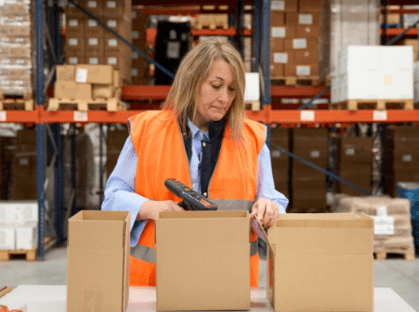
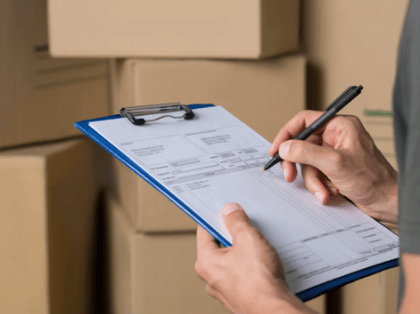
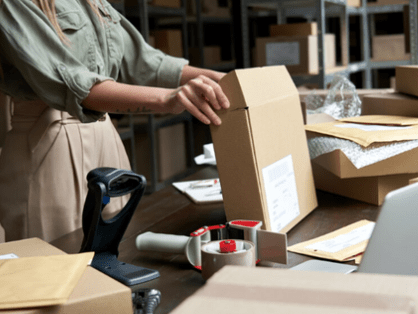
The process begins with verification, where packers cross-check the picked items against the order details to confirm accuracy and generate a packing slip. This step ensures that the correct products, quantities, and any special instructions (such as gift wrapping or inserts) are followed. Verification may involve scanning barcodes or manually checking order sheets, depending on the warehouse’s technology and scale.
Once verified, warehouse workers place the items into appropriate packing materials. The choice of packaging depends on the product’s size, weight, and fragility. Smaller, lightweight items might be packed in padded envelopes, while bulkier or delicate goods require sturdy cardboard boxes with protective packaging materials such as bubble wrap, air cushions, or packing peanuts. Efficient packaging not only prevents damage but also helps reduce shipping costs by minimising excess space and weight.
For businesses with strong branding, custom packaging is often used to enhance the unboxing experience. Branded packaging, including boxes, tissue paper, thank-you notes, or eco-friendly options can help reinforce a company’s identity and leave a lasting impression on customers. Many ecommerce brands invest in personalised packaging to encourage repeat purchases and social media sharing.
Safety & Security
Once packed, the parcel is sealed using tape or tamper-evident packaging, depending on the product type. For high-value goods, additional security measures, such as void-fill packaging or discreet external wrapping, may be used to prevent theft. At this stage, any necessary shipping labels, barcodes, or customs documents (for international shipments) are applied to the package.
Finally, the packed order is moved to the dispatch area, ready for collection by the chosen courier. If the fulfilment centre operates with a warehouse management system, tracking details are automatically updated, and customers receive notifications about their shipment’s progress.
The effectiveness of the packing process depends on accuracy, speed, and the ability to balance cost efficiency with product protection. A well-optimised packing strategy ensures that orders arrive in perfect condition while keeping fulfilment costs under control.
The Shipping Process
It's now time to dispatch the packages, so a specialist courier or delivery service will be used to ship the items out to the customers. Using advanced inventory management software, WMS and expert picking and packing methods, you can eliminate the risk of missing or incorrect items to ensure customer satisfaction.
While it's possible to take on all of these processes in-house, many modern businesses choose to outsource pick-and-pack operations to a third-party logistics provider like Direct Fulfilment 365. In fact, more businesses than ever before are turning to 3PLs, so now it's time to examine why this is the case.
Outsourcing Pick-and-Pack Services: A Smart Move?
Managing fulfilment can become a major challenge, especially as your business begins to grow and orders flood in. Packing boxes, organising inventory, and ensuring every order goes out on time is a full-time job. That’s where outsourcing to a specialist pick-and-pack warehouse can make a world of difference.
3PLs, like Direct Fulfilment 365, will handle the entire fulfilment process for you - picking, packing, and dispatching orders efficiently, so you can focus on the day-to-day running of your business.
Here’s why partnering with a professional UK-based 3PL is one of the best decisions you can make...
Storage Space
Outsourcing your fulfilment means you don’t have to worry about warehouse space, hiring staff, or managing stock manually. We take care of everything, from accurate order picking to secure packing and fast shipping, ensuring that your customers receive their orders on time, every time. With our state-of-the-art WMS, we track every item in real-time, reducing errors and improving efficiency.
Reduce Costs!
Cost savings are another huge benefit. Running your own fulfilment operation comes with expenses like warehouse rent, utilities, staff wages, packing materials, and shipping contracts. By outsourcing, you gain access to bulk shipping discounts, optimised packaging processes, and reduced overheads - all of which improve your profit margins.
While all 3PLs have their own price structure, this is often charged as a pick-and-pack fee to cover all the various stages involved. This will vary depending on certain factors, such as:
- Order Volume - Higher order volumes often lead to lower costs per unit due to economies of scale.
- Product Size & Weight - Larger or heavier items require more storage space and higher shipping fees.
- Storage Requirements - Costs vary depending on whether products need standard shelving, pallet storage, or special conditions.
- Picking Method - More complex picking strategies may influence pricing.
- Packing Materials - The type and quantity of packaging used, such as boxes, bubble wrap, or branded packaging, affect costs.
- Labour Costs - The time and workforce required to pick, pack, and prepare orders impact overall pricing.
- Technology & Automation - Warehouses using advanced pick-and-pack software or automation may have different pricing structures.
- Customisation & Special Handling - Additional services like kitting, gift wrapping, or fragile item handling may incur extra charges.
- Returns Processing - Handling and restocking returned items may come with additional fees.
Check out our post “Fulfilment centre pricing UK”.
Scalable Service
Scalability is key for any growing business. Whether you’re handling seasonal spikes or launching a new product, our flexible fulfilment solutions allow you to scale up (or down) as needed without the stress of hiring extra staff or expanding warehouse space. During peak sales periods, like Black Friday or Christmas, we’re ready to handle large order volumes with no delays or bottlenecks.
Shipping Costs
3PLs can also offer cheaper shipping as they can negotiate better rates with major delivery services, and they pass this on to the client.
How Can We Help?
Ultimately, outsourcing your pick-and-pack operations means less stress, lower costs, and happier customers. Whether you’re a small start-up or a well-established brand, we provide seamless, scalable, and cost-effective fulfilment solutions that help your business grow.
Get in touch today to find out how Direct Fulfilment 365 can take your fulfilment to the next level!