Are you planning to launch an ecommerce business? If so, you may be agonising over the choice between dropshipping and ecommerce fulfilment, which is a good sign. And even if you've been running an ecommerce site for some time, you might still be wondering if you've chosen the correct business model.
Why - you might ask yourself - is it good that you're struggling to decide between these two separate business models? Because it means that you're doing your homework and taking it seriously!
With a huge failure rate in online business (something like 90% in the first year), it's absolutely vital that you undertake as much research as possible before starting your business.
So, we're glad to see you here on this special Direct Fulfilment 365 blog that's designed to help you decide which is the best path for your business. We'll dismantle each option to see how they work, look at the benefits and drawbacks of each one, and present a summary at the end.
To begin with, though, we'll highlight a few useful statistics about the world of online shopping and illustrate the importance of seeking help and maximising every opportunity.
Starting An Online Store: Easier Than Ever?
On the whole, starting an online business has never been easier. This is partly due to advances in technology, the advent of multiple user-friendly ecommerce platforms, changes in shopping habits among consumers, as well as several other factors.
In 2023, there were around 60 million ecommerce users in the UK, and that figure is projected to rise by at least two million by the end of 2025. The total revenue for online sales in the UK is expected to reach £150 billion by 2027.
Finally, online sales account for around 30% of all retail purchases in the UK, and this is consistently growing year on year.
By all accounts, the signs are looking positive for anyone with an ecommerce store or online business!
However, success is far from guaranteed...
As we already said above, the failure rate is astonishingly and depressingly high, with most businesses closing down within the first four months. While there are many reasons for this, one of the biggest causes (according to surveys) is that the competition is simply too great.
To be clear, we don't share these statistics to make you feel disillusioned, disheartened or terrified of going ahead. At Direct Fulfilment 365, we're all about being positive, offering workable, realistic and viable solutions that massively increase your chances, not only surviving in a crowded market but thriving and growing.
Keep this in mind as we now dive into a comprehensive breakdown of these two business models: dropshipping Vs ecommerce fulfilment. Hopefully, the importance of this exercise is perhaps more apparent now. By the end, you'll have a clear idea of what's involved and which model might be the best option.
The Ecommerce Fulfilment Business Model
"Order fulfilment" is at the heart of all ecommerce sales. In simple terms, it describes the entire process from the moment a customer places an order by clicking on the 'buy now' button in their virtual shopping cart, right through to the minute the item arrives on their doorstep.
And if you want to succeed in retail, it's imperative that the order fulfilment process runs smoothly to provide a positive customer experience.
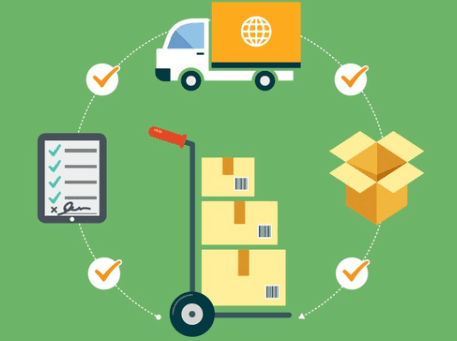
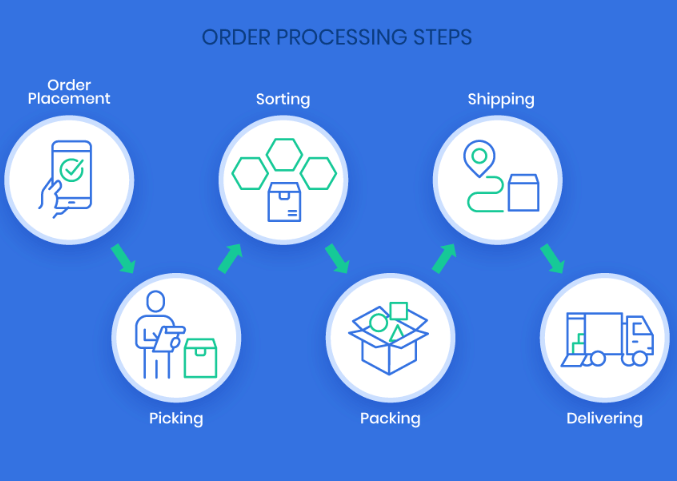
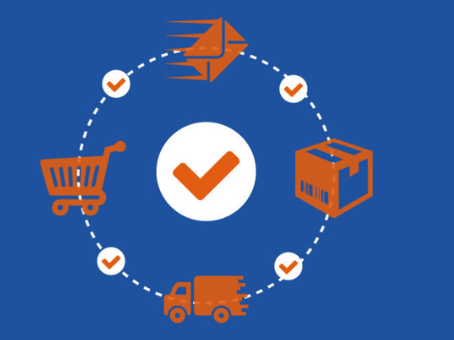
The stages of the fulfilment journey are as follows:
- Order Received - A customer orders an item from your online store.
- Order Processing - The order details are verified, and payment is confirmed.
- Inventory Check - Stock levels are checked to ensure product availability.
- Picking - The required items are retrieved from storage or the warehouse.
- Packing - Products are securely packaged.
- Dispatch & Shipping - The package is labelled and handed over to a courier or shipping service.
- Tracking & Notifications - The customer receives tracking details and updates.
- Delivery - The package is delivered to the customer’s address.
- Returns & Customer Support - Returns or exchanges are processed if required.
- Providing customer service - Queries and complaints must be dealt with!
Each one of these steps is as important as the other, and getting any one of them wrong can severely dent your profit margins! Customer dissatisfaction leads to negative reviews and ratings, and these must be taken seriously. Here are some more sobering statistics to drive home the importance of this point:
- Around 80% of customers won't buy from an online store again following a negative post-purchase experience. The same amount will avoid you after a bad returns experience.
- 86% of buyers will abandon a favourite brand after two or three negative customer service experiences. 32% of those will only put up with one bad experience, even if it's a brand they love.
- Approximately 72% will avoid a brand if they're not happy with the service, even if it's the first time they used it (this can be before they even make a purchase!).
- 85% of consumers won't use a brand after a negative delivery experience.
The fact is that customers are much more demanding these days. In a world where technology is rapidly advancing and making everything instantly available or delivering services more quickly, consumers expect perfection. The fact that you're human is not a good enough excuse; you're not allowed to make any errors or offer a less-than-perfect service!
Breaking Down Order Fulfilment
Any ecommerce business has two choices when it comes to fulfilment: They can handle everything themselves or outsource the entire process to a third-party supplier like Direct Fulfilment 365.
We're going to dissect the fulfilment process in full to see what's involved and explore the potential advantages of using a third-party logistics provider.
Order Placement & Processing
It all starts when a customer places an order on an e-commerce website or marketplace (Shopify, Amazon, or Etsy, for example). Once the order is confirmed, details such as product selection, customer address, and payment information are sent to the fulfilment system.
Typically, the order is then logged onto an order management system (OMS), and the item is checked to see if it is in stock. The customer will then receive a confirmation email.
If a business handles fulfilment itself, someone manually processes the order and prepares it for packing.
However, if a 3PL provider is used, their system automatically receives the order and begins the next stages of the purchasing journey.
Inventory Management & Picking
Efficient inventory management is the backbone of smooth fulfilment, and many businesses use warehouse management software (WMS) to track stock levels in real time and prevent overselling.
We understand that having to manage inventory and stock levels can be a headache, which is why thousands of online sellers and ecommerce businesses are moving to 3PL providers like Direct Fulfilment 365. In most cases, ecommerce merchants send a percentage of their stock to our fulfilment centres, where we take care of inventory management (even for multiple sales channels). Even so, you have real-time access to the data, allowing you to monitor stock levels and make any necessary orders and adjustments.
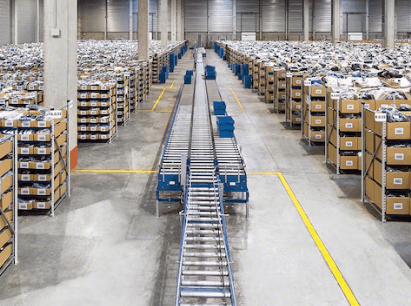
Before an order can be packed, the right products need to be located in the warehouse or storage facility. This is called picking, and there are several methods involved, depending on the size of the business (and whether they outsource to a 3PL).
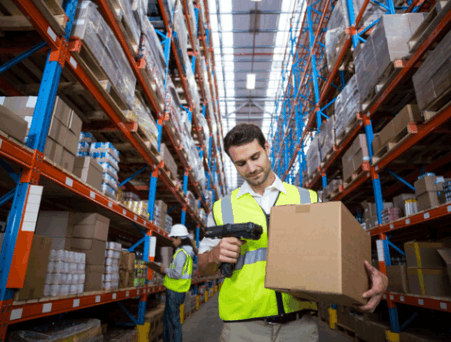
The fulfilment team (or automated warehouse system) receives a picking list detailing the items needed. Products are retrieved from storage using barcode scanners to ensure accuracy, and stock is allocated an SKU (Stock Keeping Unit) for easy and accurate identification.
To speed things up and further reduce the risk of any picking errors, the software calculates the optimum route around the warehouse, and the picked items are then transferred to the packing station.
And now, we move on to the next step!
Packing The Order
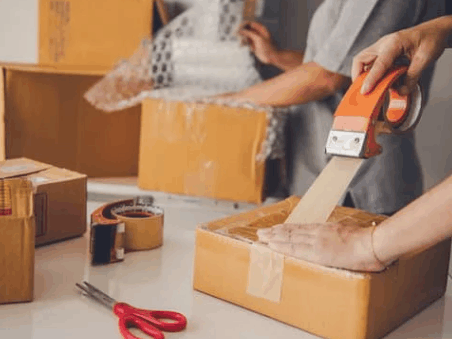
Once picked, the order moves to the packing stage, where it is prepared for safe shipment. This means choosing appropriate packaging materials to keep the items safe during transit, such as padded envelopes, sturdy boxes, bubble wrap and paper fillers.
It's also an opportunity to increase brand awareness, so custom branded packaging is often used. Not only is this a great method of increasing visibility, but it also boosts confidence in your products; consumers regard branded packaging as a sign of quality and are generally inclined to spend more on items with custom branding!
Eco-friendly packaging is an excellent option for any business that wants to reduce its carbon footprint and present an image of sustainability. All reliable 3PL and fulfilment companies will offer this, including Direct Fulfilment 365 - most of our packing materials are recyclable or biodegradable.
During the packing stage, promotional material, personalised notes, discount vouchers and 'freebies' can be inserted to improve customer satisfaction and encourage brand loyalty.
Finally, and most importantly, a shipping label will be included along with a packing slip. These will hold all the important information, such as the customer's address and all the relevant details about the item. If you're handling the fulfilment yourself, it's up to you to make sure this is correct. Customers get very upset - understandably - if their package goes astray or to the wrong address. The same applies if they receive the wrong product.
When you use a 3PL/fulfilment expert like Direct Fulfilment 365, they double-check all this as part of the dispatch process. We perform product quality checks to ensure everything is as it should be before sending any orders out. This eliminates errors, reducing the risk of unhappy customers!
Read our post "What is a pick and pack service".
Shipping
The order is now ready for shipping, so it's up to you to choose a trusted courier or delivery service that can get the package out on time.
Consumers these days expect swift delivery, and most aren't keen on paying high delivery prices, meaning that you need to keep shipping costs as low as possible.
As a third-party supplier, Direct Fulfilment 365 has established contacts with leading delivery companies, allowing us to secure favourable rates, and this can be very beneficial, especially for small business owners who may not be able to negotiate such excellent prices.
Whichever company is used, the courier typically supplies real-time tracking information, allowing you and the customer to keep tabs on the item throughout its journey.
The Dropshipping Model
It may seem odd to some readers that dropshipping is regarded as an alternative to 'traditional' ecommerce methods! Technology, online selling and shopping habits have evolved so quickly in the last couple of decades that we can now refer to certain aspects as 'traditional'.
But what is the dropshipping ecommerce business model, and is it a better choice for you? We're about to find out...
Check out our post “How do dropshippers fulfill orders”.
What Is A Dropshipping Store?
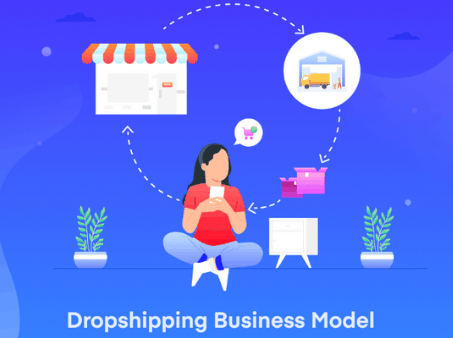
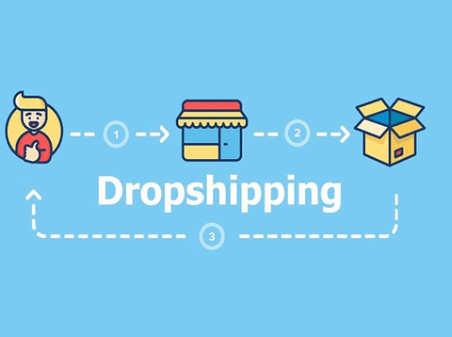
Dropshipping companies are those that sell products or services online but don't hold a physical inventory and don't handle shipping. Essentially, the online retailer is a middleman.
To explain further, a dropshipping business has an online store, but when an order is placed, the business buys the item from a wholesale supplier who ships customer orders directly from their warehouse.
In other words, you sort out the storefront, marketing and customer services, while dropshipping suppliers take care of storage, inventory and shipping.
It's a much simpler method of selling online, especially for new business owners, as you don't have the headache of dealing with your own inventory or renting warehouse space.
That's it, basically - and as you can see, it's a much simpler process than ecommerce fulfilment, which is why we've already finished explaining it!
Dropshipping Vs Ecommerce Fulfilment: Which Is Best?
To answer this, we need to be honest about the benefits and drawbacks of each method, so let's dive in, starting with electronic commerce fulfilment (including 3PL)...
Ecommerce Fulfilment Pros & Cons
First, the good stuff that makes this business model very attractive:
- Faster Shipping Times - Holding stock locally allows for faster delivery, especially if you work with a UK-based fulfilment centre or 3PL provider.
- Higher Profit Margins - Buying in bulk at wholesale prices means lower costs per unit and better profit margins. This allows you more flexibility to set your own retail prices.
- Better Brand Control - You control the packaging, branding, and customer experience, allowing for custom-branded unboxing experiences.
- Reliable Stock Management - You know exactly what’s in stock, reducing the risk of overselling or disappointing customers.
- Easier Returns & Customer Support - Handling returns and exchanges in-house or through a 3PL ensures a smoother, more professional customer experience.
- Save money on warehouse rental - If you use a 3PL provider, you don't need to worry about storage space or any of the hassle that goes with this.
- Higher customer satisfaction - This method provides the opportunity to speed up order fulfilment, eliminate errors and get the products to the customer quickly, boosting positive reviews and increasing customer loyalty.
But what about the downsides, if any?
- Higher upfront costs - You'll need to purchase inventory, which requires capital investment, and unsold stock can lead to losses.
- Storage & warehousing costs - If you manage fulfilment in-house, you need space, staff, and logistics systems to store and ship products efficiently.
- More time-consuming - Handling stock, packing, and shipping takes time, especially as your business grows.
- Scaling can be challenging - Managing large volumes of orders requires additional warehouse space and staff or outsourcing to a 3PL provider.
However, outsourcing your retail supply chain to Direct Fulfilment 365 can overcome all of these issues!
Dropshipping Pros & Cons
We'll start with the plus points:
- Low startup costs - You don't need to invest in inventory upfront.
- Minimal overheads - No need to rent storage space or hire staff for picking and packing duties.
- Wider product range - You're not limited due to storage or inventory issues.
- Easy to start and scale - You can launch your online store quickly and add products without all the worry of having to manage inventory or stock levels.
- Independence - A dropshipping merchant can run their business from anywhere as long as they have an internet connection!
And now the negatives:
- Lower profit margins - You pay the supplier for fulfilling your orders, meaning that you don't make as much from sales.
- Longer shipping times - Dropshipping retailers often buy from overseas, with most items coming from China, meaning that orders can take weeks.
- Less control over product quality - If your supplier sends a faulty item or runs out of stock, this reflects badly on your business.
- Returns can be difficult to manage - Returning items can be very costly and complex as they come directly from suppliers (often overseas).
- Highly competitive market - Unofficially, around 140,000 dropshipping businesses are operating in the UK, making it difficult to stand out unless you invest heavily in branding and marketing.
The Verdict?
Ultimately, the right choice depends on your budget, business goals, and how much control you want over the fulfilment process.
But that's a bit of an unsatisfactory answer and may not be very helpful! So, here's a quick guide that might be useful in helping you decide...
Choose Dropshipping If:
- You want to start a business with minimal investment.
- You prefer not to manage inventory or logistics.
- You’re focused on marketing and testing product demand.
- You don’t mind longer shipping times or thinner profit margins.
Choose E-commerce Fulfilment If:
- You want complete control over stock, branding, and customer experience.
- You’re willing to invest in inventory for higher profit margins.
- You want faster shipping times and easier returns.
- You’re building a long-term, scalable brand as your business develops.
In conclusion, it may seem as if we at Direct Fulfilment 365 favour 3PL order fulfilment over dropshipping, but the truth is that both can be excellent business models if handled properly.
In fact, there's no reason why you can't do both! Many successful businesses use a hybrid model, starting with dropshipping to test products and then moving to e-commerce fulfilment for best-sellers. This allows you to minimise risk while maximising profits.
However, the best way to get the most from your business is with 3PL services, and that's where we excel. Whether for dropshipping partnerships or ecommerce order fulfilment, we'll help you streamline processes and increase profit margins, ensuring your business stays ahead of the competition.
So, when you're ready for the next level, contact Direct Fulfilment 365 to put your business on the road to success.